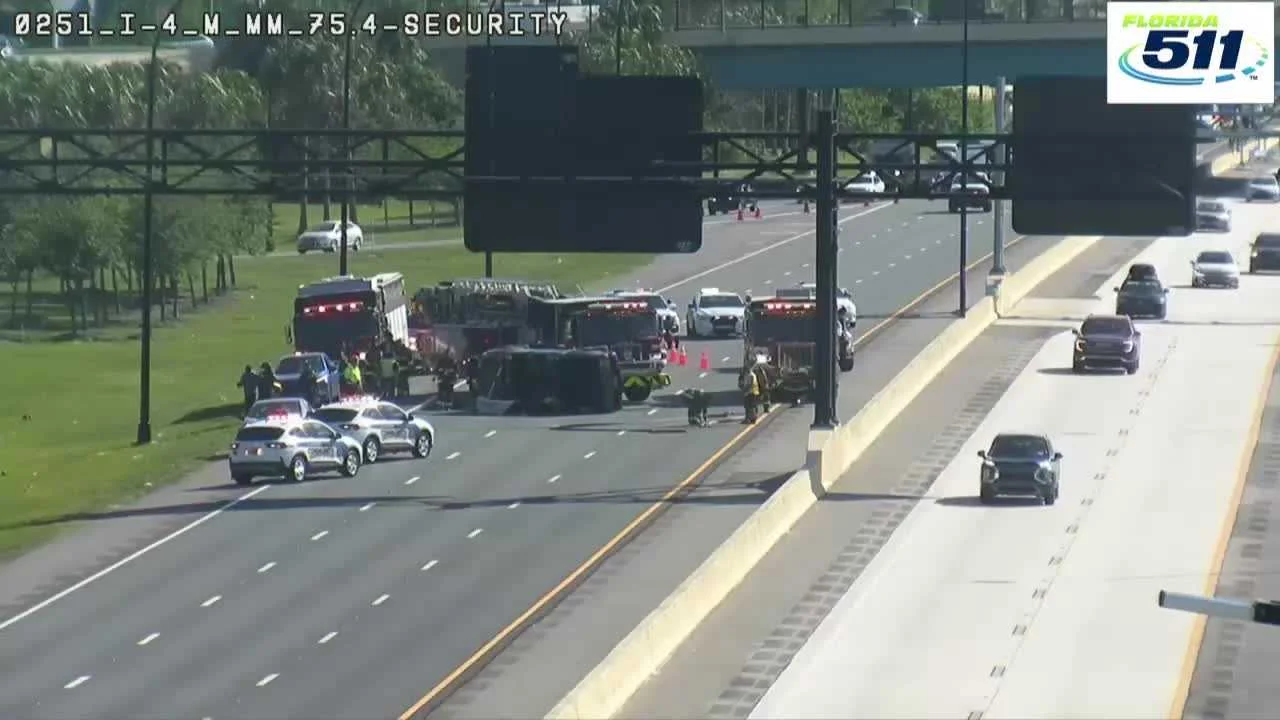
On April 22, 2026, a serious crash occurred on I-4 near mile marker 75B/State Road 435 in Orange County, Florida. The eastbound lanes were closed due to the incident, which involved multiple vehicles and significant emergency response. The exact number of injuries and fatalities is still being confirmed. WESH reports that the scene was blocked by fire trucks and law enforcement.
What Happened: Details of the I-4 Crash
The crash occurred on the evening of April 22, 2026, along the eastbound lanes of I-4 near Universal Orlando. Multiple vehicles were involved, leading to a complete shutdown of the roadway. Significant emergency personnel, including fire trucks and law enforcement, were on the scene, indicating the severity of the incident. The crash's exact cause is under investigation, but initial reports suggest potential driver negligence.
Who Is Liable for This Crash?
Driver Negligence
Driver negligence is often a primary cause in multi-vehicle crashes. Factors such as DUI, speeding, and distracted driving are considered under this theory. In this crash, specific driver behaviors are still under investigation. Negligent parties can be held responsible for damages and injuries.
Commercial Vehicle Liability
If any involved vehicle was commercial, the employer might be liable under respondeat superior if the driver was performing work duties. Investigating the vehicle's black box and driver logs is crucial.
Government Liability
If poor road conditions contributed, or if there was a delay in addressing known hazards, government entities could share liability. Florida law permits claims against governmental bodies under specific circumstances.
Your Legal Rights Under Florida Law
In Florida, if you or a loved one were injured or killed, you have rights under the law. The Florida Wrongful Death Act (Fla. Stat. § 768.19) allows families to seek damages for funerals and loss of companionship. Personal Injury Protection (PIP) coverage (Fla. Stat. § 627.736) requires your own policy to cover initial medical expenses. Florida's modified comparative negligence rule (Fla. Stat. § 768.81) applies, meaning recovery may be barred if you are more than 50% at fault.
What Compensation Can You Recover?
If you or a loved one suffered in this crash, understanding potential compensation is vital. Damages can include medical expenses, lost wages, pain and suffering, and wrongful death claims.
| Damage Type | Typical Range | Notes |
|---|---|---|
| Medical bills and future care | $150,000 to $500,000 | Emergency, surgery, rehab, ongoing treatment |
| Lost wages and earning capacity | $50,000 to $200,000 | Past and future income loss |
| Pain and suffering | $200,000 to $1,000,000 | Physical pain, emotional distress, trauma |
| Wrongful death damages | $500,000 to $3,000,000 or more | Funeral costs, loss of companionship, financial support |
Critical Deadlines - Do Not Wait
Urgency is critical. Commercial vehicle black boxes overwrite data within 30 days. Surveillance footage is often deleted within 60 to 90 days. Witnesses move and memories fade. Insurance companies start building defenses immediately.
Legal Theories That Apply to This Crash
The legal theories applicable to this crash include negligence, wrongful death (if fatalities occurred), and potentially respondeat superior if a commercial vehicle was involved. Government liability might apply if road conditions contributed. Each theory has specific implications based on the facts of this crash and can affect the outcome of a lawsuit.
7 Immediate Steps to Protect Your Rights
- Seek medical care immediately - Even if you feel fine, delayed injuries are common and gaps in treatment can hurt your claim.
- Obtain the FHP crash report number - Request the full report for accurate details.
- Photograph everything at the scene - Include road markings, skid marks, vehicle positions, and injuries.
- Do not speak to the at-fault driver's insurance - Without an attorney, anything you say can be used to reduce your claim.
- Preserve your vehicle - Do not authorize any repairs until it is inspected by an accident reconstructionist or attorney.
- Save every receipt and record - Keep all medical records, bills, and correspondence related to the crash.
- Contact a personal injury attorney immediately - Your deadline is April 22, 2028, and early action protects critical evidence.
Frequently Asked Questions
Can I sue after a crash on I-4 near Universal Orlando Florida?
Yes, if you were injured or a loved one was killed, you have the right to pursue a lawsuit against the liable parties. This can include other drivers, employers, or potentially the government if road conditions contributed. Consult an attorney to explore your specific case details.
How much is an Orange County car accident settlement worth in 2026?
Settlement amounts vary based on factors like injury severity, liability, and insurance limits. Typical car accident settlements in Florida can range from thousands to millions depending on these variables. An attorney can provide a more personalized estimate after reviewing your case.
What if the at-fault driver had no insurance in Florida?
Florida law requires drivers to carry personal injury protection (PIP), but if the at-fault driver lacks coverage, you may need to rely on your uninsured motorist (UM) coverage. Your attorney can help determine all available avenues for compensation.
How long does a Florida wrongful death lawsuit take?
Wrongful death lawsuits can take anywhere from several months to a few years, depending on the complexity of the case and whether it goes to trial. Many factors, including negotiation with insurers and court schedules, affect the timeline.
What is the statute of limitations for car accidents in Florida?
The statute of limitations for car accident claims in Florida is two years from the date of the accident (Fla. Stat. § 95.11). It's critical to act within this timeframe to preserve your right to seek compensation.
Should I accept the insurance company's first settlement offer?
No, it's generally unwise to accept the initial offer without consulting an attorney. Insurance companies often offer low settlements to minimize payouts. An attorney can help evaluate whether the offer is fair based on your damages.
Does Florida have a cap on damages in car accident cases?
Florida does not cap economic or non-economic damages in personal injury cases. However, punitive damages are capped at three times the compensatory damages or $500,000, whichever is greater.
What is comparative negligence and how does it affect my Florida car accident case?
Comparative negligence in Florida means that if you are partially at fault, your recovery could be reduced by your percentage of fault. If you are more than 50% at fault, you may be barred from recovering damages (Fla. Stat. § 768.81).
About Our Attorney Network
Authority Stack is not a law firm. We connect injured Florida residents with licensed personal injury attorneys in our nationwide network who handle Florida cases. Attorneys in our network offer free consultations and work on contingency, meaning no upfront costs to you. Fill out the form below to be connected with an attorney who handles cases in Orange County, Florida.
Get a Free Case Review from a Licensed Attorney
You may have legal rights. Connect with a licensed personal injury attorney in our network — free consultation, no commitment, no upfront cost. Attorney fees are contingency-based — you pay nothing unless you win.