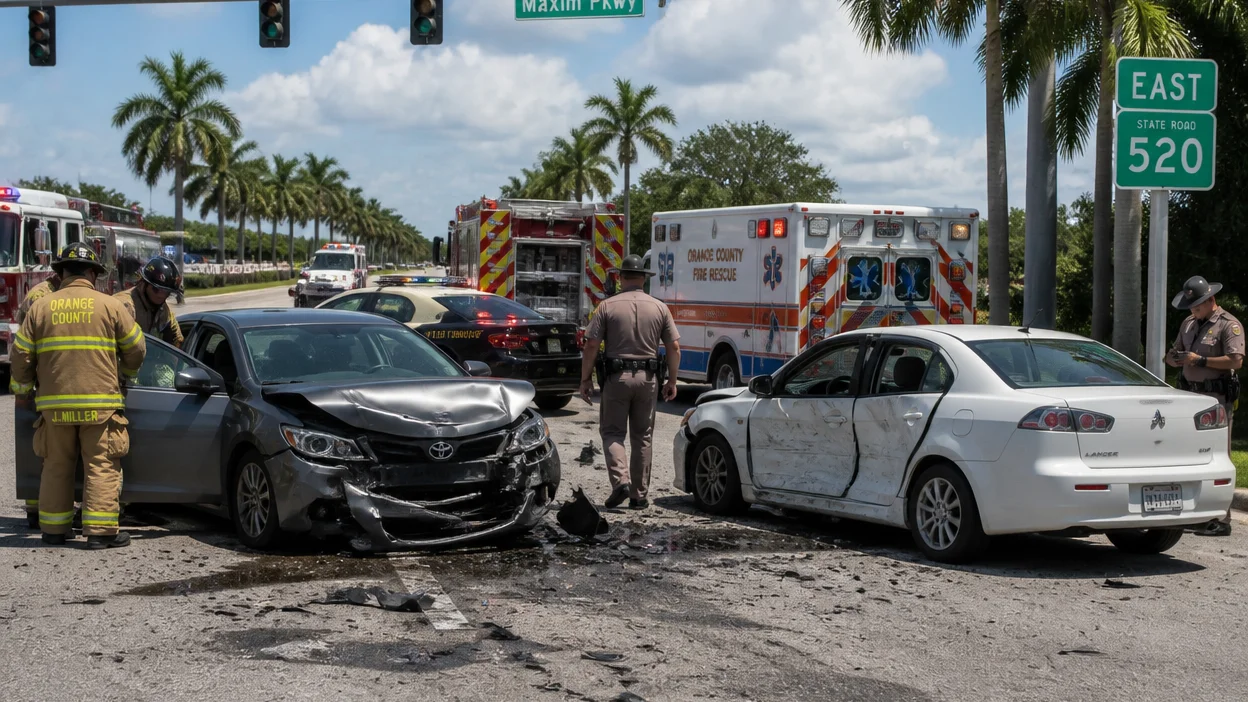
What Happened: Fatal Collision on SR 520
On August 17, 2026, a tragic accident occurred at approximately 2:30 p.m. at the intersection of State Road 520 and Maxim Parkway in Orange County, Florida. A Toyota Camry, driven by a 24-year-old man, collided with a Mitsubishi Lancer after failing to stop at a red light. The impact was severe, and the driver of the Lancer, a 41-year-old woman, was pronounced dead at the scene. The driver of the Camry sustained non-life-threatening injuries and was transported to a local hospital. The Florida Highway Patrol is currently investigating the incident. Fox35 Orlando.
Who Is Liable for This Crash?
Driver Negligence
The primary cause of this tragic accident appears to be the negligence of the 24-year-old driver of the Toyota Camry, who failed to stop at a red light and was reportedly traveling above the speed limit. This behavior constitutes a breach of the duty of care required of all drivers to operate their vehicles safely and in compliance with traffic laws. The failure to stop at a red light is a clear violation of traffic regulations and directly contributed to the collision and subsequent fatality.
Your Legal Rights Under Florida Law
In the wake of such a devastating accident, it's important for the families affected to understand their legal rights under Florida law. The Florida Wrongful Death Act, as outlined in Fla. Stat. § 768.19, allows the family of the deceased to pursue a wrongful death claim against the at-fault driver. Additionally, under Fla. Stat. § 627.736, personal injury protection (PIP) coverage is mandated, which can cover medical expenses and lost wages. Florida's modified comparative negligence rule, detailed in Fla. Stat. § 768.81, states that if a person is found to be more than 50% at fault, they are barred from recovering damages.
What Compensation Can You Recover?
Victims and their families may be entitled to various forms of compensation following a tragic accident like this one. Understanding the potential compensation can guide families as they navigate the difficult aftermath.
| Damage Type | Typical Range | Notes |
|---|---|---|
| Medical bills and future care | $150,000 to $500,000 | Emergency, surgery, rehab, ongoing treatment |
| Lost wages and earning capacity | $50,000 to $200,000 | Past and future income loss |
| Pain and suffering | $200,000 to $1,000,000 | Physical pain, emotional distress, trauma |
| Wrongful death damages | $500,000 to $3,000,000 or more | Funeral costs, loss of companionship, financial support |
Critical Deadlines - Do Not Wait
Time is of the essence in these cases. Critical evidence can disappear quickly, such as commercial vehicle black boxes that overwrite data within 30 days, or surveillance footage that is often deleted within 60 to 90 days. Witnesses can become difficult to locate, and their memories may fade. Insurance companies begin building their defense immediately, so it's crucial to act without delay.
Legal Theories That Apply to This Crash
Several legal theories could be applicable in the aftermath of this tragic crash. The primary theory would be negligence, given the driver's failure to adhere to traffic laws by running a red light and speeding. This breach of duty directly led to the collision and the resulting fatality. In the case of a fatality, the wrongful death theory applies, allowing the deceased's family to seek compensation for their loss. This includes damages for loss of companionship, future earnings, and funeral expenses.
7 Immediate Steps to Protect Your Rights
- Seek medical care immediately - Even if you feel fine, some injuries can manifest later. Early treatment not only safeguards your health but also documents your injuries.
- Obtain the FHP crash report number - Request the full report for your records, as it contains crucial details about the accident.
- Photograph everything at the scene - Capture images of road markings, skid marks, vehicle positions, and any injuries. These images can be invaluable during claims or litigation.
- Do not speak to the at-fault driver's insurance company - Anything you say can be used against you to reduce your claim. Consult with an attorney first.
- Preserve your vehicle - Do not authorize any repairs until an accident reconstructionist or attorney inspects it. The condition of the vehicle can be crucial evidence.
- Save every receipt and document - Keep all medical records, bills, and correspondence related to the crash. These documents will support your claim.
- Contact a personal injury attorney immediately - Early action can protect critical evidence and help you understand the full scope of your rights and options.
Frequently Asked Questions
Can I sue after a fatal crash on SR 520 in Orange County Florida?
Yes, if you are a family member of the deceased, you may file a wrongful death claim against the responsible party. This process involves proving that the other driver's negligence led to your loved one's death. It's essential to consult with an attorney who can help you navigate the complexities of Florida's wrongful death statutes.
How much is an Orange County car accident settlement worth in 2026?
The value of a car accident settlement varies based on factors such as the severity of injuries, the impact on the victim's life, and the degree of negligence involved. Settlements can range from tens of thousands to millions of dollars, especially in cases involving wrongful death or severe injuries.
What if the at-fault driver had no insurance in Florida?
If the at-fault driver is uninsured, you may still have options for compensation through your own insurance policy, particularly if you have uninsured motorist coverage. This type of coverage is designed to protect you in situations where the at-fault party lacks sufficient insurance.
How long does a Florida wrongful death lawsuit take?
The timeline for a wrongful death lawsuit can vary significantly. Factors include the complexity of the case, the willingness of parties to negotiate, and the court's schedule. Generally, these cases can take several months to a few years to resolve.
What is the statute of limitations for car accidents in Florida?
In Florida, the statute of limitations for filing a personal injury claim is typically two years from the date of the accident. For wrongful death claims, the timeline is also two years from the date of death. It is crucial to adhere to these deadlines to preserve your right to seek compensation.
Should I accept the insurance company's first settlement offer?
It's generally advisable not to accept the first settlement offer from an insurance company. Initial offers may be lower than what you are entitled to receive. Consulting with an attorney can help you understand the true value of your claim and negotiate more effectively.
Does Florida have a cap on damages in car accident cases?
Florida law does not impose a cap on economic damages such as medical expenses or lost wages. However, there are limitations on non-economic damages, such as pain and suffering, in certain cases involving medical malpractice. Consult with an attorney to understand how these laws may apply to your case.
What is comparative negligence and how does it affect my Florida car accident case?
Comparative negligence is a legal principle that reduces the amount of compensation you can receive based on your percentage of fault in the accident. In Florida, if you are found to be more than 50% at fault, you cannot recover any damages. Understanding this principle is crucial when pursuing a claim.
About Our Attorney Network
Authority Stack is not a law firm. We connect injured Florida residents with licensed personal injury attorneys in our nationwide network who handle Florida cases. Attorneys in our network offer free consultations and work on contingency, meaning no upfront costs to you. Fill out the form below to be connected with an attorney who handles cases in Orange County Florida.
Get a Free Case Review from a Licensed Attorney
You may have legal rights. Connect with a licensed personal injury attorney in our network — free consultation, no commitment, no upfront cost. Attorney fees are contingency-based — you pay nothing unless you win.