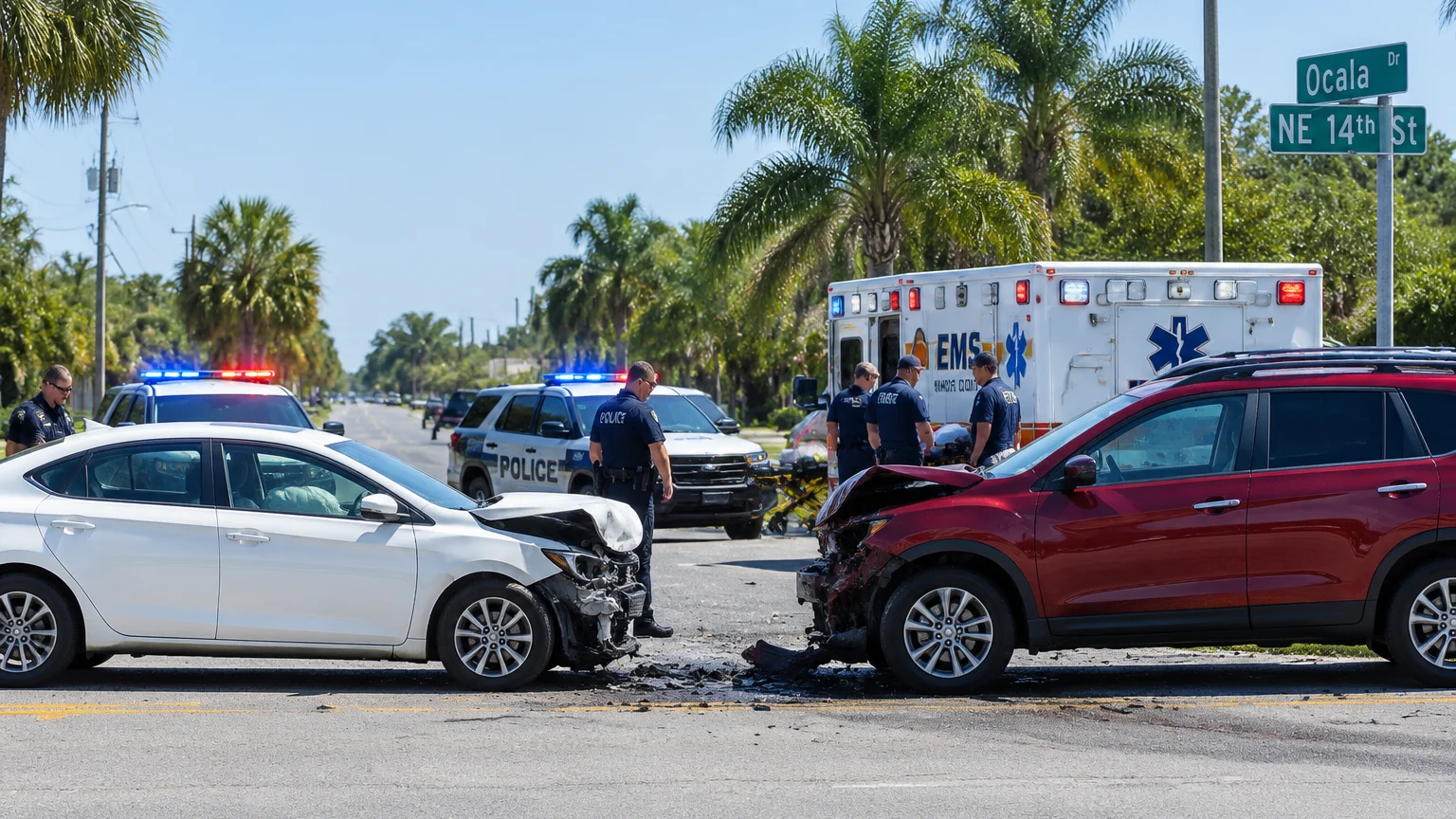
What Happened: A Lapse in Judgment
The crash happened on a quiet Ocala street when an impaired driver, who had been stopped earlier by a police officer but allowed to continue driving, collided with a vehicle carrying a mother and her son. According to the WFLA Tampa report, the officer's decision is under scrutiny as the family mourns their losses.
Who Is Liable for This Crash?
Driver Negligence
The driver, having shown signs of impairment, holds primary liability for this tragic event, given the DUI implications.
Government Liability
The Ocala police officer's decision to allow the impaired driver to continue represents a potential lapse in duty, raising questions of government liability.
Your Legal Rights Under Florida Law
Families impacted by such tragedies may pursue claims under the Florida Wrongful Death Act (Fla. Stat. § 768.19), which allows for recovery of damages following the wrongful death of a loved one. Additionally, Florida's PIP requirements (Fla. Stat. § 627.736) and modified comparative negligence rules (Fla. Stat. § 768.81) will influence potential claims.
What Compensation Can You Recover?
Victims' families may seek compensation for various damages. Here's a breakdown of typical financial recoveries:
| Damage Type | Typical Range | Notes |
|---|---|---|
| Medical bills and future care | $150,000 to $500,000 | Emergency, surgery, rehab, ongoing treatment |
| Lost wages and earning capacity | $50,000 to $200,000 | Past and future income loss |
| Pain and suffering | $200,000 to $1,000,000 | Physical pain, emotional distress, trauma |
| Wrongful death damages | $500,000 to $3,000,000 or more | Funeral costs, loss of companionship, financial support |
Critical Deadlines - Do Not Wait
It is essential to act quickly. Commercial vehicle black boxes overwrite data within 30 days, and surveillance footage is typically deleted within 60 to 90 days. Witnesses move, memories fade, and insurance companies begin building their defense the same day as the crash.
Legal Theories That Apply to This Crash
Several legal theories apply, including negligence due to the driver's impaired state, wrongful death due to the fatalities, and potential government liability due to the police officer's actions.
7 Immediate Steps to Protect Your Rights
- Seek medical care immediately - Even if feeling fine, delayed injuries are common and gaps in treatment can hurt claims.
- Obtain the FHP crash report number - Request the full report for detailed information on the incident.
- Photograph everything at the scene - Capture road markings, skid marks, vehicle positions, and injuries.
- Do not speak to the at-fault driver's insurance company without an attorney - Anything you say can be used to reduce your claim.
- Preserve your vehicle - Do not authorize any repairs until an accident reconstructionist or attorney inspects it.
- Save every receipt, medical record, bill, and correspondence - These documents will be crucial for your claim.
- Contact a personal injury attorney immediately - Your deadline is October 02 2028 and early action protects critical evidence.
Frequently Asked Questions
Can I sue after a DUI crash in Ocala Florida?
Yes, you can sue if you or a loved one were harmed in a DUI crash. An attorney can help you navigate the complexities of a personal injury or wrongful death claim in Florida.
How much is an Ocala car accident settlement worth in 2026?
The value of a settlement depends on various factors, including the severity of injuries, liability, and available insurance. Consulting with an attorney can provide a more accurate estimate.
What if the at-fault driver had no insurance in Florida?
In cases where the at-fault driver lacks insurance, your own uninsured motorist coverage may provide compensation. It's crucial to review your policy details.
How long does a Florida wrongful death lawsuit take?
Wrongful death lawsuits can vary in length, often taking anywhere from several months to a few years, depending on the complexity of the case and court schedules.
What is the statute of limitations for car accidents in Florida?
The statute of limitations for car accidents in Florida is two years from the date of the accident for personal injury claims (Fla. Stat. § 95.11(4)(a)), and the same applies for wrongful death claims (Fla. Stat. § 95.11(4)(d)).
Should I accept the insurance company's first settlement offer?
It's generally advised not to accept the first offer as it may not fully cover all damages. An attorney can negotiate for a more comprehensive settlement.
Does Florida have a cap on damages in car accident cases?
Florida does not have a cap on compensatory damages for car accident cases. However, punitive damages are capped at three times compensatory damages or $500,000, whichever is greater.
What is comparative negligence and how does it affect my Florida car accident case?
Comparative negligence in Florida means that if you are partly at fault for the accident, your compensation will be reduced by your percentage of fault. If you are more than 50% at fault, you may be barred from recovery.
Was the police officer's decision in Ocala a factor in the crash?
The officer's decision to allow the impaired driver to continue may be a factor in liability. This could lead to claims of government liability if it contributed to the crash.
How does impaired driving affect legal claims in Ocala?
Impaired driving is a serious offense and can significantly influence legal claims, often increasing the liability of the at-fault driver and potentially leading to punitive damages.
About Our Attorney Network
Authority Stack is not a law firm. We connect injured Florida residents with licensed personal injury attorneys in our nationwide network who handle Florida cases. Attorneys in our network offer free consultations and work on contingency, meaning no upfront costs to you. Fill out the form below to be connected with an attorney who handles cases in Marion County Florida.
Get a Free Case Review from a Licensed Attorney
You may have legal rights. Connect with a licensed personal injury attorney in our network — free consultation, no commitment, no upfront cost. Attorney fees are contingency-based — you pay nothing unless you win.